Tuesday, May 6, 2008

Chillin' in the Desert

Following my Zambian adventure I popped down south to Windhoek. From there I travelled to Walvis Bay via a long-distance combi (which is always and adventure), where I got picked up by a crew of students and interns from the Gobabeb Research and Training Center for a rather exciting night-ride along gravel roads to a set of buildings that are literally in the middle of nowhere: Gobabeb. The goal was to visit a good friend of mine from Grinnell, Jaimie Adelson, as well as another Grinnellian whom I hadn't known as well, John Guittar, at their GrinnellCorps post in the Namib Desert. For those of you (like me) with minimal knowledge of Namibian Geography, here's a map showing the Namib. The desert is formed from a deposition of silt and sand that flows out of the Orange River. Because the river has no delta, for some reason which I haven't figured out yet, all the sediments from the river get pushed out to sea, where a rather strong current and wind system push them north onto the coast. This created the Namib, which is a true desert just large enough to be termed a "Sand Sea" at 34,000 square-kms.


Ok, so maybe the map didn't come out as well as I'd hoped, but you get the idea. Gobabeb is situated on the edge between the Sand Sea and the Gravel Plains, on the banks of the Kuiseb river, which is ephemeral (doesn't run all year). Mostly, the river is an outlet for floodwater, but it supports a surprising array of vegetation and wildlife.


My visit to the Namib started off with a day-long excursion with the Namibian Geologists Association. Because Jaimie was supposed to be creating a teaching module about the Namib's geology she was accompanying them and taking notes, while I just got to come along for fun. And what a great trip!

The leader of the trip knew so much about the area it was almost unbelievable. And he wasn't too intellectual to dumb it down for us non-geology PhD's either, so it was a great trip. We got to see the river bed and how it changes and influences the geology of the surrounding area, the gravel plains, the sand dunes and fossil beds in the dunes, and some old diamond claims in the dune field. Apparently, the river is the only thing holding back the dunes on the southern side of the Kuiseb. Sand moves with sand, and not without it unless there are exceptionally strong winds. So every year the flooding in the Kuiseb bed washes away the side of the dune that's trying to make it's way north into the river bed, and the progress of the dunes is halted there. It's acutally amazing to think that this one river bed can stop the entire 34,000 square kms of sand from progressing over a stretch of 100 meters or less, but it's true. That's what creates the gravel plains on the other side of the river and what keeps places like Walvis Bay and Swakopmund from being overwhelmed by the northward progress of the dunes. Anyhow, enough of my geological ramblins. If it were that fun to be a geologist all the time I would abandon Chemistry! It was an absolutely fabulous day.


Beetle tracks on a dune

But other than that excursion I mostly just got to see life "as it is" in a place like Gobabeb. I was surprised at the amount of deskwork involved in a "normal" day out there... somehow you would think that more field work would occupy the scientists stationed in the middle of the desert. But it makes sense, in a way. The station is admirably outfitted with amenities that one wouldn't expect to find in the desert. Solar power fuels the station with more than enough electrons to keep their lights, computers, refrigerators, etc. running and water is sucked out of a deep aquifer just across the river bed. Internet and phone are available via a sattellite connection (although the reliability of this is somewhat unpredictable) and the workers have plenty of gas available for cooking stoves and ovens. They even have their own sewage recycling system to pump their used water back into the environment and hopefully recharge their aquifer. Overall a pretty impressive achievement for a place in the middle of nowhere! Even if it is run by nerds and scientists! And as an added plus, they have a nifty water tower that looks a little bit like an air-traffic control tower, or maybe a UFO. Definitely adds character to the place!


Trip to the Dunes with the Gobabebians

Most of my time was very sedate out at Gobabeb, but that doesn't detract from its worth. I absolutely love the sand dunes and the opportunity to be completely isolated from every other human being on the planet. You can laugh, shout, sing at the top of your lungs... and not a soul in the world can hear you. Except the multitudes of insect life, that is. Truly, you cannot appreciate the wonder of this place without visiting. The sunsets are exquisite--watching a sun set behind dunes has to be one of my favorite views of all time.

Especially when I'm sitting on another dune with a cool drink in hand, just enjoying life. Even just the view of the night sky would make a visit to this desert worthwhile--you can see every star in the sky. You can see the Milky Way so well that you can pick out the "Coal Sacks" where debris creates dark spots by obscuring our view of the stars, you can pick a planet out of the sky instantly by its luminescence, size, and color. You can even see starts that twinkle in all different colors like a disco ball. And shooting stars are so common you don't even remark on them after a few nights! A stunning view, and worth every instant that I spent staring at it. Unfortunately, my lame little Powershot can't capture such beauty... so you'll just have to take my word for it.

(Gobabeb in Fog!!)

Even in a week's time at Gobabeb, I wasn't able to see everything that the sight had to offer. Apparently there are scorpions inhabiting the trees in the riverbed that fluoresce when viewed under UV light, Welwitschia plants that get their water from condensing fog (they are pretty crazy, actually), higher dunes to hike around, much more of the riverbed to explore, and probably more that I'm not even aware of. But I'm glad that I got to spend a week there to get a sense of the place and the work that goes on there. It could have been my life this year, after all!

So many of you are probably wondering at this point (especially after I've gone on and on about how amazing Gobabeb is) whether I think I made the right choice by accepting the Watson Fellowship instead of choosing the Grinnellcorps position at Gobabeb. And my answer is this: how can we ever know for sure? I certainly have experienced a lot in my travels on the Watson that I never would have at Gobabeb... marimba being only the most obvious aspect. I also think that my time at MaP on its own weighs the scale towards the Watson, simply because I can't imagine a more fulfilling experience than teaching and playing there. But, on the other side of things I can see myself being very happy at Gobabeb because I tend to thrive in small communities where I can make a home for myself and dig in. In some ways I would have resented all the desk work because this is supposed to be my break from that sort of thing, but I also might have learned a lot of really crazy and interesting things about the desert. So all in all, I am not unhappy to have chosen the Watson, but I also respect the opportunities I would have had at Gobabeb. And as much fun as I would have had working there with my friend Jaimie, I think it's better for both of us to encounter new people and spend time away from our old friends from Grinnell. I don't think either of us is the person who walked away from Grinnell last May!

Since leaving Gobabeb I have been hanging around in Swakopmund on the coast. It has been a rather interesting week of just chilling in cafes, sitting on the beach, and reading a book or two. I have enjoyed myself immensely--Swakop has great cafes and restaurants. Unfortunately, as I left Gobabeb I was beginning to develop what I think was an ulcer in my esophagus. Gross, right? Well, it was also very painful for a while and lessened my enjoyment of the above mentioned cafes and restaurants, but now that I am feeling better I don't mind so much. I'm guessing that the whole episode was a consequence of my long-term ibuprofen use for my back problems combined with the doxycycline that I am taking as an antimalarial, but whatever it was, I'm glad that I'm mostly healed at this point.

Yesterday morning I decided that I wanted to finally do something with my time here, so I signed up for a Dolphin and Seal Cruise. What is that, other than the obvious chance to go out on a boat and see dolphins and seals? Well, it's a chance to drink a lot of alcohol (apparently, although not for me with my esophagus the way it is), eat seafood for lunch (also not for me... vegetarian), and have really strange encounters with other tourists! Don't get me wrong, it was a fun morning, but there were some elements of the ridiculous to it.

The first problem was my lack of warm clothing. I sent my warm jacket home with my parents in December because it was bulky (and the temperature was 100 degrees Fahrenheit every day) but it turns out that I am left with a combination of rather pathetic sweaters and one fleece as my "warm" stuff. Of course, until now that has been more than enough! But I had no hat, scarf, gloves, jacket, or even closed-toed shoes (left those in Windhoek... who would have thought I'd need them in the desert?). So it was a bit chilly at 9 AM out on the fog-covered Atlantic ocean. But it was easy to forget about this as a rather large, wet seal jumped up into our boat and slithered along the seats! Apparently they are trained to do come aboard so that the tour operators can show them off to passengers (I don't even want to think about the environmental implications of that one). So our guides fed the seal some frozen fish out of a cool-box they had on deck and explained about how the seals hunt, eat, etc. The funny part was when the guide tried to get the seal off the boat! They're trained a bit too well that there's free fish on board. Later on we had two or three other seal visitors... they would just haul themselves on board whenever we stopped to look at something. It made an interesting trip!

We also got to see some interesting things that weren't on the boat. The oyster farms were our first stop--the oysters are imported when still almost microscopic in size and fed on artificial phytoplankton until they're big enough to put in a net and string up on a platform in the middle of the sea off of Walvis Bay. Apparently the nutrient concentration in the Namibian waters makes these oysters grow to an edible size in 8 months, which is almost twice as fast as anywhere else in the world! They're supposed to taste good too, but I wouldn't know :). It's funny to put together all the bits and pieces I know about Namibia when I hear things like this, because I know all about the nutrients available in that part of the ocean from a great upwelling zone off the Namibian coast. But that's from back at Grinnell...

There were plenty of dolphins and pelicans where we went, too, and some adventurous seagulls who kept trying to steal the fishy bribes that we used to get them close to the boat. Overall it was an interesting trip... but not the best cruise I've taken. It was certainly an interesting way to spend a morning, though!

Every so often I run into situations (like out on this boat) where the nerdy-sciencey-intellectual part of me wants to break through. It's a bit funny that I've spent my whole life trying to gain knowledge and intelligence so far, and now I'm playing dumb. But people here get a bit uncomfortable when they realize that you're "a smart one" so I often do try to put them at ease and bypass that side of my personality. Last night was a stunning example... those of you who know me well won't be able to believe this! I was trying to find a nice restaurant to have dinner at (since I could finally eat again) but everywhere I wanted to go was booked solid. Surprising for a Wednesday night, but that's how it was. So I ended up sitting at the bar at a place called the "Lighthouse Pub and Grill" near the beach. It's a place I had been eying for a few days, so I was happy to try it out, even if I had to sit at the bar. So I pulled out a book--a nice one, actually: African Laughter-- and I was enjoying my Hunter's while I waited for my food and read about Doris Lessing's post-independence visits to her home in Zimbabwe. Now, apparently that's not particularly common behavior for anyone here in Swakopmund (not that too many people ever seem to go out for meals on their own, anyway) and I got accosted and greeted by a man who came over to the bar and sat down. He seemed nice enough, so I chatted with him for a while... only to learn that he was an American from Texas who was the CEO of an oil investment company called EnerGulf. So here I am... sitting, chatting with a middle-aged man who likes to hunt game (the more endangered the better), pollutes the environment with oil prospecting, speaks with a Southern accent, and is incredibly arrogant. Sounds like my kind of guy, huh? And as amusing as this is... this very moment I have had to refuse a call from his number. Ugggh. Maybe I should turn off my phone! I was too honest to give him a false number last night. But anyhow, it was just a weird situation and I'm hoping to just slip away into the mists without having to fend off any more invitations to come along on oil prospecting or hunting trips.

Anyhow, that's where I am and what I'm doing! I'm heading back to Windhoek tomorrow for some shopportunities... I need a winter jacket! Or at least some sort of jacket :). And I can bum around there just as easily as I can here. Maybe I'll even get some work done on my transcription project--you never know!

PS--more photos on their way!

Friday, May 2, 2008

Into the heart of Zambia....and back again!

Well, plenty of things have happened since I last had a reliable Internet connection! So lets start at the top.

Firstly, it was harder than I had ever expected to leave Maru-a-Pula at the end of the term. The staff, students, marimba kids, and everyone else had become such a family to me that I was almost heartbroken to have to leave them. And it's always the case that at the end of your time in a place you learn what you would have liked to know at the beginning! Some of my students were absolutely heartbroken to have me leave as well... which I hadn't expected at all! Especially some of my Form 1 theory/recorder students who hadn't really been my main focus during the term. But I will sure take a lot of good memories away from MaP with me!

I also need to thank my friends and colleagues at MaP for making my stay such an amazing part of my fellowship year. In many ways I could not have asked for a better situation. The marimba was fabulous in every way--I will not hesitate to say that it is the most intense and enjoyable marimba experience I have ever had! The students in the group were a lot of fun and I enjoyed playing with them and learning from them. In some ways I was a sideline because I wasn't able to come on the US tour with them, but they still included me and made me part of their family, which I greatly appreciate. Some of you may already have heard about the fiasco in Johannesburg with this touring group, but for those of you who haven't I have to post something about this.

Since Alport Mhlanga arrived back in Gaborone in late January he and I have been working practically non-stop on a renovation of the performance marimbas. There were many details to be attended to from re-stringing to tuning to modifying the buzzers, and we must have put in over 100 hours of work simply on the instruments themselves in addition to all the rehearsal time, administrative work, finding costumes, etc. This wasn't Alport's first overseas tour with a MaP marimba band, so he had all the details sorted out and planned for, up to and including the packing methods necessary for the instruments so that they could all fit as luggage on the airplane for no extra charge. After a sleepless night of taking marimbas apart and strapping the pieces together in all sorts of strange ways, the band hops into a bus and tows their equipment to Johannesburg to get on their flight. Now, unfortunately, there had been a change in the baggage regulations regarding metal and wood since the last MaP tour...which meant that while the students could get on the plane, their instruments stayed in Johannesburg. But was that the end? Well, it could have been! An emergency call went out to practically every percussionist on the East Coast in an attempt to track down 10 Zimbabwean Marimbas with F#s, up to and including the marimba player from the pit orchestra of Broadway's The Lion King. CBS actually ran a news clip on it! And the most surprising thing of all is that they actually found marimbas! Apparently there was a die-hard marimba player who had moved from the Southwest with her set of marimbas in the New York areas and she was able to save the day. What a crazy thing! I'm told that the tour went well, so it must have been ok, but I sure wish I had been there to help sort out that mess!


Instead, I had hopped into a car with one of the PE teachers from Maru-a-Pula who is from Zambia. We started at 3:30AM and drove the whole day, stopping only at the border post to get the appropriate clearance for the car. We made it all the way to a town between Livingstone and Lusaka before stopping for the night--that must have been the longest day of driving I have done in a while! We also were hindered by several stretches of road where the potholes have completely taken over. It was actually amazing to see the extent to which the road has deteriorated... the only way I can think of to describe it is resembling the surface of the moon! But we made it, in the end. Little did I know that these potholes would be my downfall in a little over a week's time!


The next morning we attended the retirement service of a lovely old nun who taught at the teacher-training college where my friend from MaP had lectured several years back. This lady was a great friend to her, so we both attended the service and the celebratory meal afterwards. What an interesting event! There was a traditional choir there from the Northern Province who sang the most beautiful songs!


I am trying to upload a video, but I haven't had a lot of success with that in the past. I also enjoyed eating with my hands :) as is traditional here. It really takes some skill to get this non-finger-food into your mouth without spilling it everywhere and looking like a total spaz. It was quite fun, though!


After that it was straight on to Lusaka, where we arrived quite late. We stayed the night with a friend of my colleague and that was actually very cool. I enjoyed seeing her home and meeting the family and it was really nice to crash for a night in peace. However, I was greatly mistaken when I thought that this was the "difficult" part of the journey... as it turned out I was dumped on a bus to Mongu in the Western Province the following morning without any real directions, no airtime on my cell, and the vague idea that I was supposed to ride the bus to the end of the line and then look for a friend of my friend's named Frieda. I was a bit more than apprehensive about this, but I really shouldn't have been, I suppose.


The bus ride itself was definitely an experience! I found that there was a large distance to cover, not much space on the bus, very few rest stops, and in general just few conveniences. Lucky for me that I don't ever get hungry when I travel these days! But I met a really nice man on the bus named Father Francis. He was actually a catholic priest and we had a lot of good discussions on my way out West. In fact, he was able to give me contact information for a man who is part of the Lozi Royal Family and used to play the Shilimba (Lozi marimba) for all sorts of things. But that's jumping ahead of myself. After arriving and finding this contact of mine in Mongu I got to attend the last day of the Kuomboka Ceremony.


The Kuomboka Ceremony takes place annually on the banks of Limulunga. The ceremony celebrates the end of the rainy season each year by displaying the return of the chief to the wet part of the region. He is paddled by a collection of young tribesmen in an oblong-shaped boat under a canopy with a large replica of an elephant on top. His wife and minister also got boats, with other animals adorning the tops. After a rather elaborate ceremonial trip downriver to Limulunga, the Chief disembarks and presides over four days of traditional music and dancing provided by his people from all over the area. I missed out on the first bits because I only arrived for the last day of the ceremony, but I did get to see a lot of traditional music and dancing on the last day. It was really an interesting spectacle! Firstly, the outfits were different than I had expected. The men actually wore skirts--supposedly this is from the Scottish colonial influence, but I was just confused. They aren't kilts, but actual knee-length skirts with a sort of elaborate red/black/white patterning. But they are very proud of these outfits, so there must be something more to them!

The dancing is hard to describe, so I will simply put up some pics (all poor quality, I'm afraid, as I was taking them from behind a few rows of people!). But I can describe the local Shilimba in more detail. The Lozi call their marimba a "shilimba" and it is played as a solo instrument or with two to three players. This differs from the Zim-marimba tradition in which each player has their own instrument and several instrument play together because there will only ever be one shilimba on the stage at a time, but there could be anywhere from one to three players on the various ranges of the instrument. In general, the players used a "split-hand" technique rather than a rolling technique and the rhythmic texture was very thick. A single melody did not arise from the instruments, the focus was on the texture and complexity of the music. For those of you who are marimba players, think about the main tenor part to Nehmamusasa and then add in a few more players on similar parts! The left hand will generally beat out a bass line while the right hand plays around with rhythm and what they hear as melody, but if a player is left-handed he may just stand on the opposite side of the marimba so that his left hand can play the higher notes instead! That was quite fun to watch. The shilimba also never plays alone. It is an instrument that is so interwoven with the singing and dancing that accompany it that they are one and the same to a local.


The following day I looked up Dr. Lewanika, my connection from this man I met on the bus, and got to question him for about an hour on the practices and traditions that surround the shilimba. Turns out there are several uses of the instrument, ranging from everyday entertainment to secret-code-like communication with their shaman during ceremonies. That was the most interesting thing about it to me--the music and the vocals were inseparable to this man, who had played the shilimba as a youth. Apparently it is also part of the smoke and mystery surrounding the shamans, because Dr. Lewanika kept describing the music as a necessary part of the shaman's movement--the player had to be sensitive to signals telling him when to play, otherwise the shaman's movements wouldn't be as full of weight and he would lose the intimidation factor.

That interview marked the last of my days in Mongu and I boarded a bus back to Lusaka the following morning. My intention was to stay several days in Lusaka, but I found once I arrived that there was very little to see or do. I spent a day walking around, seeing markets, etc. but didn't feel like giving it to much more of my time. I then boarded a bus to Livingstone, where I thought I should stop by to see Victoria Falls on my way south to Namibia. But against my better judgement I decided not to pre-book my bus ticket because it would take a rather arduous walk through the blazing afternoon heat. I was assured that I could just show up in the morning at the bus--which I did, except that it was fully booked. So instead of getting on the reliable bus where they gave you bottles of water and free cookies I ended up on a bus run by Marks Motors...normally a pretty reputable company as well. I had an interesting trip for the first several hours... of course, having to fend off the too-enthusiastic young Zambian men who are always asking for your phone number, but nothing majorly inconvenient.

But then we hit that lovely patch of road that I described from my trip northward as looking like the surface of the moon. About 1 km into this disaster-zone we hit a pot-hole too hard and the bus ground to a halt. Now, if I hadn't been on the bus for the entire day, if the bus hadn't been infested with cockroaches, if I hadn't had to fend off one particular 20-year old guy for the whole journey, I might have been more lenient and patient with the drivers. But as it was, I was tired of nonsense. After the first three attempts to fix the bus failed (there was a leak in the break line that wouldn't let the bus move) and my oh-so-friendly 20-year old Zambian hailed a passing pick-up for a lift, I decided to jump in as well. So there I am, with my huge backpack full of clothes, small backpack full of computers and other random stuff, and no jacket, bouncing along in the back of a pickup along the worst road imaginable. And surprisingly, it was a lot of fun! There were three other Zambians with us who were also out of patience: two older ladies and an old gentleman. They were hilarious, debating how far it was to Livingstone about every two minutes, chatting with me about my trip and about how I had found Zambia, and just being amiable. The best part was that this annoying fellow I have been describing was silent for the whole trip! I think he was intimidated by the older crowd, and maybe that I was so comfortable chatting with them. But in any case, I certainly enjoyed the trip. As my one and only experience hitch-hiking, I would say that it was a success. And it is surprising how normal it is to hitch a lift in Zambia... the normalcy of it makes the risks lower and the utility higher. But the most important part was that I made it to Livingstone as planned and didn't have to put up with yet another bus break-down!

My time in Livingstone was much less eventful. I went to see the falls the day after I arrived, and it certainly was a stunning sight to see. There was much more water than I remembered from my visit in December--so much, in fact, that you needed a raincoat to cross the bridge onto the island where you view the falls! I have never seen so much mist in my life, and despite my raincoat I managed to get soaked through.

Something else that I didn't know was that on nights when the moon is full you can come back to the falls in the evening to view a "lunar rainbow" that the moon casts in the mist of the falls. This idea intrigued me to the point where I had to go see it--despite paying extra admission--and it was definitely worth it! What a cool thing... a rainbow in sort-of pale shades of white and gray, no real colors to speak of, but cast so strongly in the mist that you could see the full arc. I guess there's no reason why that shouldn't be possible, but it is definitely something I had never thought about before. I wish I could post a picture, but it's not something that photographs well with a tiny automatic camera! It is definitely one of those sights that has made me wish I had the knowledge and equipment to do some real photography, though!


I spent the next few days bumming around in Livingstone before I calculated my budget after taxes and realized that I have way more money than I should at this point in my fellowship year! To celebrate, I took a micro light over the falls--basically that's a motorized hang-glider that you go up in with just a pilot and you! And what a view, I can tell you! I was pretty nervous... that genetic fear of heights does still have a hold on me... but it was worth the terror. Check out the photos and I'm sure that you'll agree about the view! They don't let you take your own camera up, so all the photos are from a camera mounted on the wing of the craft and don't quite do the view justice, but still. I also got to see a better view of the canyon than I had ever seen before and I learned a fair amount about the geology from my pilot. He was pretty cool--he even let me fly the thing for a few minutes! That was an adrenaline rush, I can tell you!


A few days later I got on a bus and headed for Windhoek, Namibia, where my next post will pick up from. Whew! These posts do pile up when you're away from the internet!

Tuesday, April 22, 2008

Μια πρώτη επαφή με το Βερολίνο

Το Βερολίνο είναι μία πόλη με τεράστια ιστορία και χαρακτήρα. Τα χαρακτηριστικά της είναι άπειρα, με μερικά από αυτά να είναι τα κτίρια της Πότσνταμερ Πλατς και ο Βοτανικός κήπος, μάθετε περισσότερα εδώ.
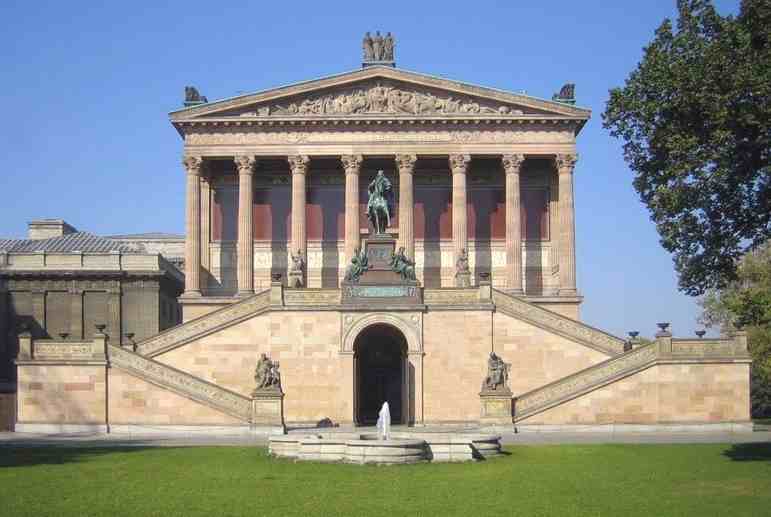
Επίσης, εξαιρετικό ενδιαφέρον παρουσιάζουν τα μουσεία της πόλης. Στο Βερολίνο βρίσκεται το πασίγνωστο νησί των μουσείων, δείτε το εδώ, καθώς και μια πληθώρα άλλων τοποθεσιών, όπως η πινακοθήκη με τεράστια συλλογή έργων τέχνης. Τέλος, στο Βερολίνο υπάρχουν απίστευτα πάρκα, με το Τιργκάρτεν να είναι ένα από αυτά που βρίσκονται στην καρδιά της πόλης.


Sunday, April 13, 2008

Μία νύχτα στη Βαρκελώνη

Στη Βαρκελώνη μπορείτε να ξεκινήσετε μία βραδιά σας στο μαγαζί του γνωστού καλλιτέχνη, Manu Chao, το El Mariachi, βρείτε το εδώ.
Δείτε ένα βίντεο από το "El Mariachi" με ακουστικό live από τους Manu Chao, Tonino Carotone και άλλους...


Αν δεν μείνετε στο Mariachi όλο το βράδυ οι επιλογές είναι πολλές για να συνεχίσετε το βράδυ σας καθώς βρίσκεστε στη Βαρκελώνη.
Μία επιλογή θα μπορούσε να είναι ένα πέρασμα από το γραφικό bar "Marsella" , που είναι ένα μαγαζί ανοιχτό από 1820 με το αψέντι του να το κάνει πολύ γνωστό.


Υπάρχουν, βέβαια, και γειτονιές "διασκέδασης" στην Βαρκελώνη. Μία από αυτές είναι η "L'Eixample" που βρίσκεται βόρεια του κέντρου. Εκεί υπάρχουν πολλά bar και club ώστε να διαλέξετε.
Τέλος, αν ψάχνετε για διασκέδαση αποκλειστικά σε club, δείτε εδώ μία λίστα με τα διαθέσιμα στην Βαρκελώνη.

Tuesday, April 8, 2008

Σημαντικά στοιχεία:

Πληθυσμός

3,390,000

Νόμισμα

Όνομα: Euro
Κωδικός: EUR
Σύμβολο: €

Ηλεκτρικές πρίζες

European plug with two circular metal pins
230V 50Hz

Ομιλούμενη γλώσσα

Επίσημη: German

Time Zones

GMT/UTC +1 (Central European Time)

Διεθνής τηλεφωνικός κωδικός

+49


Friday, April 4, 2008

The End of Term is Coming!

And boy are we ready for it!

Please don't misunderstand my sentiment here... I am absolutely thrilled to be participating in such a music program as Maru-a-Pula has to offer. But at the same time, one can only go so many weeks without a decent night's rest! I have been working 10-12 hour days for the past two months and I am tiiiiired. Luckily for me, I also have an amazing friend amongst the Maru-a-Pula staff who has offered to take me north to Zambia with her when she goes home for the school holiday next Saturday. This really is lucky, because otherwise I would be sitting around here in Gabs (which goes completely dead over holidays...everyone goes back home to their villages, etc.) twiddling my thumbs and wondering how to accomplish anything up north. So, unfortunately, there is no rest for the weary as we are departing next Saturday morning at 4 AM! But at least there will be less stress and pressure at that point.

We had a nice music meeting today--our last of the term. It was so nice to hear how much they have appreciated my help these past months. I have greatly enjoyed this chapter of my travel year and it is wonderful to feel like I am able to give something back as well. I am just tying up the loose ends at this point... which is a bit sad. One of my classes was devastated to hear that I was leaving (they had obviously forgotten since I told them at the beginning of the term) and they all came up to give me hugs at the end of class. What sweethearts!

And the marimba tour is hurtling full-speed-ahead towards their departure on April 12th. I am sad that it didn't work out for me to go with them... I really feel close to a lot of the players at this point and in some ways it's like abandoning your family at the time they need you the most. But since HQ is adamant that I cannot come back to the US for anything, there isn't much that I can do! I will have to concentrate on having fun in other places doing other things. At least Zambia promises to be a unique and interesting experience!

One hiccup that I have encountered this week is a computer crash. Yes, my beautiful pint-sized laptop is having Windows Vista issues and won't start up properly. Now, the IT guy at MaP is trying his best to fix it, but he's been under so much pressure to get other things done before the end of term that it's been put on the back burner. :( At least it looks like I should be able to recover the files off of it--and at worst it will just need a clean wipe of the hard drive and reinstallation of all the programs I had on there. Such is life! It would have been much worse if this had happened anywhere else.

And that's all the news from this side of things! Please cross your fingers for me that the elections in Zimbabwe come to a peaceful conclusion!!

Over and out!

Thursday, April 3, 2008

Μην ξεχάσετε να δείτε..

  • Τη Ramblas, δείτε την εδώ, μια διπλή λεωφόρο με εξαιρετικά φαρδύ πεζόδρομο στη μέση, η οποία εκτείνεται από την Placa Catalunya ώς το λιμάνι. Γεμάτη χρώματα με τα κιόσκια, τα ανθοπωλεία, τους πλανόδιους πωλητές μικρών ζώων, αλλά και τους καλλιτέχνες να δίνουν ολόκληρες παραστάσεις, η Ramblas αποτελεί σημείο συνάντησης για τους Καταλανούς και από τους πλέον τουριστικούς δρόμους της πόλης.
  • Το ύψους 76 μέτρων άγαλμα του Κολόμβου, δείτε το, στο τέλος της Ramblas, όπου βρίσκεται η είσοδος του λιμανιού.
  • Το «λόφο των Εβραίων» Montjuic, πανοραμική άποψη εδώ. Πρόκειται για τον μεγαλύτερο ανοιχτό χώρο της Βαρκελώνης, όπου βρίσκονται πολλά από τα μουσεία της πόλης και κάποια ολυμπιακά ακίνητα. Ανεβείτε ώς εκεί με τελεφερίκ!
  • Την Barri Gοtic, «γοτθική συνοικία», δείτε την, στα στενά δρομάκια της οποίας χτυπούσε η καρδιά της Βαρκελώνης κατά τον Μεσαίωνα, ενώ σήμερα φημίζεται για τα μπαράκια της. Αν ωστόσο πάτε ημέρα θαυμάστε τον καθεδρικό ναό της Αγίας Ευλαλίας και το παρεκκλήσι του Χριστού της Ναυπάκτου.
  • Το Parc de la Ciutadella, μπορείτε να το δείτε εδώ, το δημοφιλέστερο πάρκο της πόλης, με ζωολογικό κήπο, αλλά και μουσεία ζωολογίας και γεωλογίας.
  • Τις «παιχνιδιάρικες» δημιουργίες του αρχιτέκτονα Antonio Gaudi, σε διάφορα σημεία της πόλης, αλλά και των συγχρόνων του μοντερνιστών. Από τα σημαντικότερα έργα του Gaudi τα Casa Battlo και Casa Mila ή Pedrera (λατομείο), το πάρκο Guell και ο μεγαλεπήβολος, πλην αρχικά ημιτελής ναός Sagrada Familia (Αγία Οικογένεια). Δείτε την Βαρκελώνη από το Parc Guell.
  • Το γήπεδο Camp Nou, το «σπίτι» της Μπαρτσελόνας, και τον ειδικό χώρο στον οποίο φυλάσσονται όλα τα τρόπαιά της! Πανοραμική άποψη του γηπέδου, εδώ, ενώ είναι γεμάτο.
  • Την Boqueria, την καλύτερη αγορά της πόλης, με φρεσκότατα κρέατα, ψάρια και λαχανικά.
  • Το μουσείο του Πικάσο. Δείτε εδώ μερικά έργα του καλλιτέχνη.